
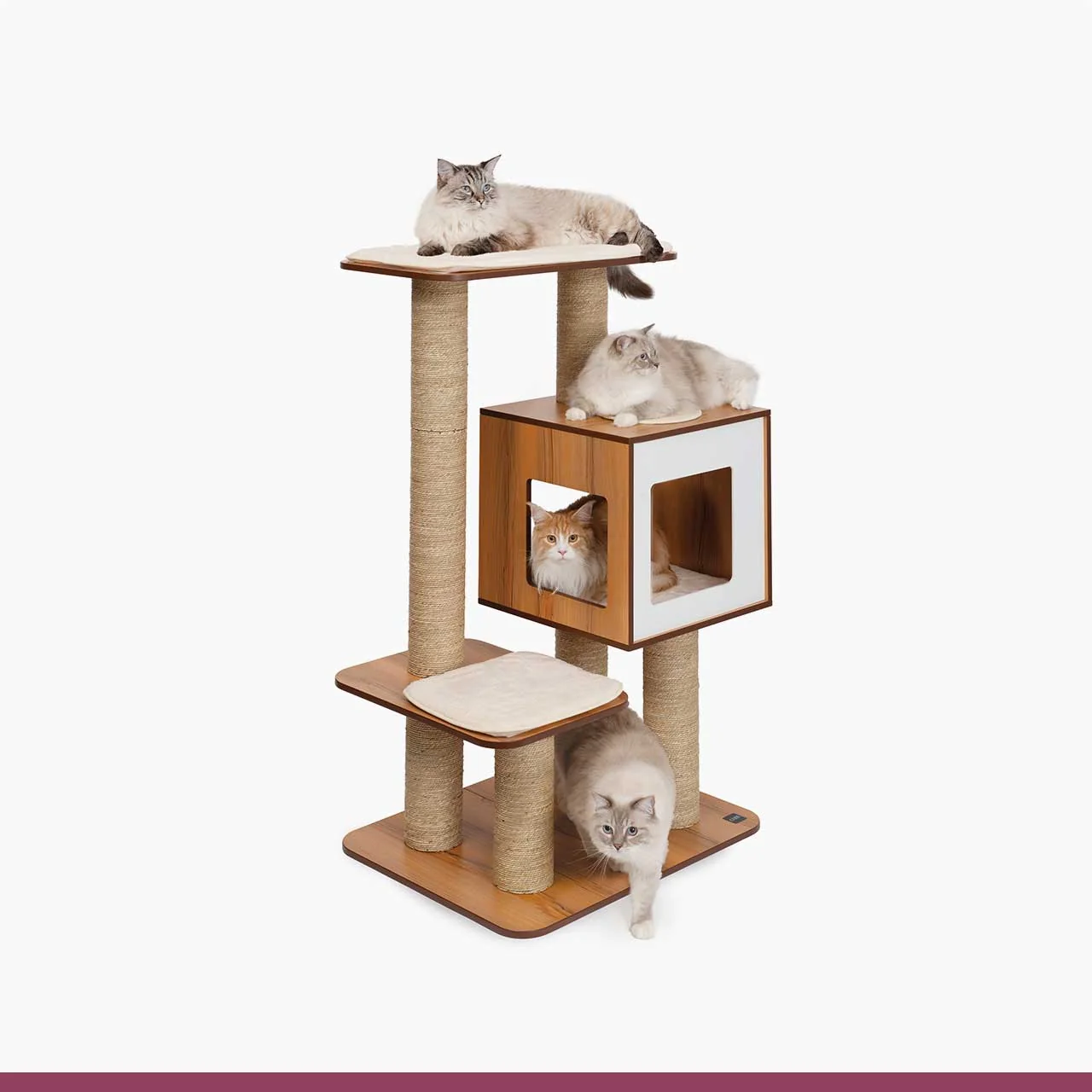
Cat Tree Buying Guide: Height, Base, and Sisal That Cats Use in 2026
September 13, 2026 · Editorial Team
Our Top Pick
A cat tree (condo, tower, or activity tree) is vertical furniture with platforms, hideaways, and scratch surfaces. It is not a behavior cure-all. Scratching is normal. ASPCA guidance is to redirect where cats scratch — not to stop scratching.
We are the Pet Standings editorial team. We are not veterinarians or certified behaviorists. Aggression, sudden behavior changes, or pain while climbing belongs with your veterinarian.
Why scratching is not a "bad habit"
The ASPCA destructive scratching guide is clear: cats scratch during play, while stretching, to mark territory, and to shed frayed outer claws. The goal is appropriate outlets, not punishment.
Core ASPCA points that still matter when you shop a tree:
- Offer variety — cardboard, carpet, wood, sisal, and other textures; horizontal and vertical options.
- Sturdy posts that do not shift or collapse when the cat leans in.
- Tall enough to stretch fully (one reason cats love drapes).
- Place posts where the cat already wants to climb; scent with catnip and hang toys to invite use.
- Cover or block "illegal" targets and put a legal post next to the problem furniture.
- Do not force paws onto a post. Do not throw away a shredded favorite post — worn posts are often preferred.
- ASPCA is strongly opposed to declawing as a behavior fix.
A tall tree helps only if the cat uses it. Height alone does not stop sofa scratching.
Tower vs scratcher: what you are actually buying
Retail "cat tree" tags mix very different products. On manufacturer pages we score:
- Multi-level towers with named sisal, jute, or seagrass posts — Catit Vesper High Base / Treehouse and Prevue towers on our ranking.
- Wide-base multi-cat condos — e.g. Prevue Catville with published footprint and weight caps.
- Compact cardboard scratchers — useful as extra outlets (ASPCA wants variety), not as a substitute for a stretch-height sisal tree.
We do not invent tip-lab scores, Amazon-star averages, or claw-wear hours. We score published base size, height, named scratch materials, spare parts, assembly docs, and multi-cat claims from U.S. maker pages.
Criteria that actually change the buy
1. Base footprint and tip risk language
Ask what the PDP publishes:
- Base L × W (or area you can compute)
- Anti-tip / "stable base" / "prevent tipping" language
- Published weight or multi-cat capacity
- Documented wall-anchor kit (rare on the SKUs we verified)
A 72-inch tower on a ~19-inch square base is a different safety story than a shorter tree on a wide platform. We are not a tip-table lab — we only score what makers document.
2. Stretch height vs platform size
Useful PDP claims:
- Published height in inches
- Enough height for a full stretch (ASPCA notes most cats like posts tall enough to stretch)
- Extra-wide platforms or large-breed language when you have Maine Coons / Ragdolls / similar
Catit High Base Giant trades some ceiling height (~53.7 in) for enlarged platforms and extra-thick posts. High Base XL pushes ~62.2 in with five stories. Match the SKU to the room and the cat, not to a "taller is always better" meme.
3. Named scratch surface and spare parts
Prefer makers that name sisal, jute, or seagrass and publish replacement posts/mats. Cardboard refill SKUs are fine for horizontal/compact scratchers — they are not the same as rope-wrapped posts.
If your cat already prefers horizontal cardboard, keep that outlet and add a vertical sisal face. ASPCA wants variety until preference is clear.
4. Assembly, tools, and service docs
Hex keys in the box, PDF/video manuals, and spare-parts catalogs change ownership cost. A tree you can re-rope stays useful longer than a sealed particle-board spike with no parts list.
5. Placement and multi-room coverage
One condo in a quiet corner rarely covers every scratching hotspot. ASPCA: place legal posts next to problem furniture and in areas the cat already climbs. Multi-cat homes need more surfaces, not one shared penthouse.
6. Honesty about price and unresearched brands
On 2026-09-02 research, Catit and Prevue product pages we scored did not publish consumer USD list prices — our ranking uses "See price." We skipped Frisco/Chewy PDPs that blocked fetches, Midwest SKUs without published height, and brands without verified maker pages. We do not invent street prices into the score.
How we rank cat trees on Pet Standings
We score researched U.S. manufacturer pages (Catit Vesper / PIXI and Prevue towers) on safety (base, anti-tip language, weight/multi-cat, wall kit), quality (named sisal/jute/seagrass, thickness, spares), ease (manual/video, tools, parts, wipe-clean), and value (published height bands and hideaway/level count). Overall weighting lives on the cat trees category page. We do not claim a tree "fixes" furniture scratching by itself.
Buying checklist
- Watch how your cat scratches today — vertical rake vs horizontal pick — before buying one SKU.
- Prefer a sturdy base with published footprint; be skeptical of very tall / very narrow stacks without a wall kit.
- Aim for stretch height the cat can use, or for large-breed platforms if height is secondary.
- Require named sisal, jute, or seagrass for the main posts (cardboard is an add-on texture).
- Prefer brands with spare posts/mats and an assembly PDF or video.
- Put the tree where the cat already hangs out; add a second legal post next to the sofa target.
- Keep worn posts — ASPCA says shredded favorites often work better than brand-new ones.
- Nail trims and temporary claw caps are management tools ASPCA lists; declawing is not.
- Multi-cat homes: more posts in more rooms, not one shared tower.
- Call a veterinarian or qualified behavior professional for aggression or fear — not a taller condo.
Who should buy which style
- Large breeds or multi-cat homes wanting wide platforms and thick posts — consider Catit Vesper High Base Giant if the ~53.7 in height fits.
- Households wanting ~5 ft of documented Catit height with spare parts — Catit Vesper High Base XL (~62.2 in, 5 stories).
- One- or two-cat rooms that cannot take a 62-inch tower — Catit Vesper High Base (~47.8 in) with the same serviceable seagrass system.
- Cats that want a real sisal trunk + hammock stack — Catit Vesper Treehouse Large (~64.1 in) on our ranking.
- Wide footprint / several smaller cats — Prevue Catville Tower 7240 (published 15 lb × up to 5 cats; huge floor print).
- Extra compact cardboard outlet — Catit PIXI Tall Scratcher (refill SKU) in addition to a sisal tree.
Who should skip (or wait)
- Expecting one tree to replace multiple legal scratch surfaces.
- Buying the tallest SKU with the smallest base and no wall-anchor plan.
- Declawing as a furniture strategy (ASPCA opposed).
- Forcing paws onto posts during "training."
- Trusting marketplace star averages we did not score — use maker dimensions and materials.
Disclosure
We may be paid by companies we feature. This may influence rankings. Product cards below point at units we already researched on manufacturer pages. We did not invent tip-test percentages, claw-wear lab scores, or veterinary endorsements.
Sources
ASPCA — Destructive scratching; Catit Vesper High Base Giant / XL / High Base / Treehouse and PIXI product, manual, and spare-parts pages; Prevue Catville / Waterfall Trails / Greycastle Estates manufacturer pages cited in our cat trees ranking.
More Picks We Love
The six U.S. pet insurers we have verified from public policy pages — not a guessed list.
Frequently Asked Questions
Will a cat tree stop sofa scratching?▾
Not by itself. ASPCA treats scratching as normal and focuses on sturdy, preferred legal posts placed where the cat already scratches — plus covering illegal targets.
How many scratch surfaces do I need?▾
ASPCA recommends variety (textures and orientations) in multiple locations. Multi-cat homes need more outlets, not one shared tower.
Is taller always better?▾
No. Stretch height helps, but a tall thin base without a wall kit is a different risk profile. Large-breed platforms can matter more than raw inches.
Are you veterinarians?▾
No. We are the editorial team. Medical or serious behavior advice belongs with your veterinarian or a qualified behavior professional.
Where are the ranked cat trees?▾
Our cat trees ranking lists researched Catit and Prevue models from manufacturer pages. This article is the buying checklist.
Want the rest of our research?
Browse Pet Standings hubs for dogs, cats, food, and health. We only publish ranked product cards when we have verified the items.
See ranked cat trees →